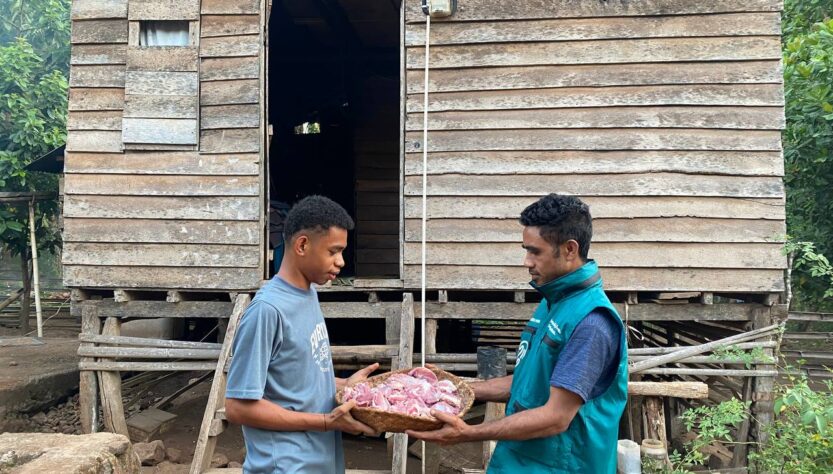
Technological developments have changed many aspects of life, including the way Muslims carry out sacrificial worship. If in the past the sacrificial process was identical to going directly to the breeders or the mosque committee, now people can buy sacrificial animals, pay, and receive slaughter reports just via cellphone. This phenomenon is known as online sacrifice or digital sacrifice.
Digital sacrifice is a practical solution for modern society who have limited time, distance and access to slaughter locations. Through the online platform, someone can choose a sacrificial animal, determine the distribution location, and make payment in a matter of minutes.
However, this convenience also raises new questions, can digital sacrifice be considered valid according to the Shari’a? What is the law regarding online sacrificial contracts? Therefore, it is important for us to understand the laws of digital sacrificial jurisprudence so that the sacrificial services carried out remain in accordance with religious guidance and become a blessing for all.
Understanding the Fiqh of Digital Sacrifice
The sacrificial service has a strong foundation in the Koran and hadith. As Allah SWT says in Surah Al-Kautsar verse 2 which means: “So pray for your Lord and make sacrifices.”
In the context of jurisprudence, the majority of scholars state that sacrifice is a sunnah of sukakadah or a sunnah that is highly recommended for capable Muslims.
Meanwhile, what is meant by digital sacrificial jurisprudence is a discussion of Islamic law regarding the implementation of sacrificial worship through digital media or online platforms. This includes the contract process, payment, distribution of animals, slaughter, and distribution of sacrificial meat which is carried out with the help of technology.
Basically, digital sacrifice is not a new type of worship. The only process that changes in sacrificial worship is the media and mechanism for its implementation. The basic law on sacrifice remains the same, namely:
- Animals qualify
- Slaughter is carried out at the specified time
- The intention of worship is because of Allah SWT
- Distribution is made to those entitled
The Law of Digital Sacrifice According to Fiqh
- Online Covenant in Sacrifice
One of the main discussions in digital sacrificial jurisprudence is the validity of online contracts. In Islam, contracts do not have to be done face to face. As long as there is a clear agreement, mutual consent, and does not contain elements of fraud, then the contract is considered valid.
Digital transactions via applications, websites, or bank transfers can be analogous to permitted forms of modern contracts. This is similar to the practice of online buying and selling which has now been widely accepted by contemporary scholars. Therefore, purchasing sacrificial animals via digital platforms is basically permitted.
- Wakalah or Representative in the Sacrifice
In the process of implementing digital sacrifices, sacrificers generally represent the purchasing and slaughtering process to certain institutions. In jurisprudence, this concept is called wow or representative.
Wakalah is valid as long as the party entrusted with it carries out its duties according to the Shari’a. The Prophet SAW himself once delegated several matters to his friends.
This means that a person is not obliged to slaughter the sacrificial animal himself. He may appoint a committee, social institution, or digital sacrificial service provider to carry out the process.
- Not witnessing a massacre, is it legal?
Many people are worried because the online sacrificial process means they cannot see the slaughtering process directly. In fact, in fiqh, witnessing the slaughter is not a valid requirement for sacrificial worship.
Being present and witnessing the slaughtering process directly is recommended because it has its own spiritual value. However, if this is not possible, the sacrificial service remains valid as long as the slaughter is carried out in accordance with Islamic law.
Moreover, currently many digital sacrificial platforms such as Insan Bumi Mandiri have provided documentation in the form of photos, videos or complete slaughter reports as a form of transparency regarding the sacrifice so that the sacrificial service still feels close even though it is not witnessed directly.
The Law of Digital Sacrifice According to Ulama
In determining the jurisprudence of digital sacrifice, we can also refer to the opinions of the following experts and scholars.
- Indonesian Ulema Council (MUI)
MUI has allowed various digital transactions in the sharia economy, including online buying and selling and electronic payments. Therefore, digital sacrificial mechanisms are considered acceptable as long as they are trustworthy and transparent.
The concept of digital transactions such as digital sacrifice is seen as a form of modern muamalah development that is still permitted as long as:
- Does not contain fraud
- There is clarity of the contract
- Animals meet the requirements for sacrifice
- Slaughter is carried out according to sharia
- Opinions of Contemporary Fiqh Scholars
Many contemporary scholars consider that digital sacrifice is basically just a change in transaction media, not a change in worship. The scholars are of the opinion that the essence of sacrificial worship remains the following:
- Intention because of Allah SWT
- Animals according to sharia
- Slaughter on time
- Distribution to those entitled
Therefore, the use of applications or digital platforms does not affect the validity of worship as long as these conditions are met.
- Ulama’s Views on Wakalah in Sacrifice
Fiqh experts agree that it is permissible to represent the slaughter of sacrificial animals. In Islam, a person is not obliged to slaughter his own animal. This concept is called wownamely the transfer of power to another party to carry out an affair.
Even since ancient times, the practice of representation in sacrifice has been known, especially when someone is unable to be present directly at the slaughter location. Therefore, digital sacrifices that use a system of representation to committees or social institutions are still valid according to fiqh.
Evidence Supporting the Possibility of Digital Qurbani
- Principles of Comfort in Islam
Islam is a religion that provides convenience for its people. As Allah SWT says in QS Al Baqarah verse 185 which means: “Allah desires ease for you and does not desire hardship for you.”
The use of technology in sacrificial services is currently being carried out to make worship easier. So this is considered permissible as long as it does not violate the Sharia.
In the rules of fiqh it is stated: “Basically all forms of muamalah are permissible until there is an argument that forbids it.” Because there are no specific prohibitions regarding online sacrificial transactions, this practice is permitted as long as it complies with sharia principles.
Ensuring the Legal Provisions of Digital Offerings
Even though digital sacrifice has been called legal according to the Shari’a, we still have to pay attention to several conditions for legal sacrifice to ensure that the sacrifice carried out is truly legal and has the value of worship. Following are several important requirements in digital sacrificial jurisprudence that need to be considered.
- Make sure the animal meets the Sharia requirements
Even though the selection of sacrificial animals is done online, make sure that the sacrificial animals you choose or provide meet the sacrifice requirements, including:
- Healthy and not disabled
- Quite old
- Types of animals according to sharia
- Well maintained
- Ensure the slaughtering process is carried out on time
The slaughter of sacrificial animals is only valid if it is done after the Eid al-Adha prayer until the end of Tasyrik, namely the 13th of Dhul Hijjah before sunset. If the slaughter is carried out outside this time, it is not counted as a sacrifice.
Even if you don’t witness it in person, make sure the online sacrificial institution you choose slaughters your sacrificial animal on time.
- Choose a Trusted Institution
The most important thing to ensure that digital sacrificial jurisprudence is considered valid according to sharia is to choose an online sacrificial institution or platform that is trustworthy, transparent and has a good track record. Make sure the institution you choose actually carries out slaughtering according to sharia.
Trusted online sacrificial institutions will usually provide:
- Detailed animal information
- Slaughter documentation
- Distribution report
- Clear legality
So that your sacrificial worship can be legal according to the Shari’a and in accordance with the laws of digital sacrificial jurisprudence, make sure you choose a trusted institution such as Insan Bumi Mandiri which has a Sacrifice in the Interior program to provide a reliable, transparent and well-targeted sacrificial service for Muslim residents in the interior.
PakarPBN
A Private Blog Network (PBN) is a collection of websites that are controlled by a single individual or organization and used primarily to build backlinks to a “money site” in order to influence its ranking in search engines such as Google. The core idea behind a PBN is based on the importance of backlinks in Google’s ranking algorithm. Since Google views backlinks as signals of authority and trust, some website owners attempt to artificially create these signals through a controlled network of sites.
In a typical PBN setup, the owner acquires expired or aged domains that already have existing authority, backlinks, and history. These domains are rebuilt with new content and hosted separately, often using different IP addresses, hosting providers, themes, and ownership details to make them appear unrelated. Within the content published on these sites, links are strategically placed that point to the main website the owner wants to rank higher. By doing this, the owner attempts to pass link equity (also known as “link juice”) from the PBN sites to the target website.
The purpose of a PBN is to give the impression that the target website is naturally earning links from multiple independent sources. If done effectively, this can temporarily improve keyword rankings, increase organic visibility, and drive more traffic from search results.